Own Your Audience: Spielberg's Podcast Debut, Celebrity Narratives & YouTube's New Directors
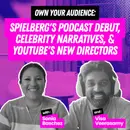


Sonia sits down with Visa Veerasamy, writer, marketing consultant, and author of Friendly Ambitious Nerd, to break down Steven Spielberg's first podcast appearance, how YouTubers are skipping film school and breaking box office records, and why Ferrari's electric car launch flopped. The big thesis: own your audience before you ask for permission, and platforms are selecting for people who can speak well at length.
Steven Spielberg went on his first podcast ever at 78 years old. He joined Bill Simmons and Sean Fennessey on The Rewatchables to talk about 2001: A Space Odyssey, nerding out about his relationship with Stanley Kubrick, how he made ET and Close Encounters, and giving insights you'd never get from a traditional press junket. Leonardo DiCaprio did the same on The Big Picture and New Heights with the Kelce brothers. Celebrities are going direct to podcasts because they control the narrative, journalists aren't throwing gotcha questions, and audiences get to hear them talk about process instead of politics. Miles Teller said he's done with magazine interviews after one made him look like an asshole. The Ringer partnered with Netflix to turn all their podcasts into video shows. Late night shows are dying because podcast distribution is better: you can target niche audiences, cut clips that go viral on social media, and celebrities get hours to explain their work instead of five-minute soundbites.
Platforms are now selecting for people who speak well. Actors who can't do long-form interviews won't be as beloved as the ones who can explain their process beautifully.
Ferrari launched their first electric car designed by Joni Ive and it flopped. The exterior looks nothing like a Ferrari. People liked the interior but couldn't get past the outside. The lesson: if you violate your brand's core identity, you lose both your existing customers and the new ones you're trying to attract. Cadillac did the same thing. Nostalgia is going to win. We're in the New Coke era where brands are making embarrassing pivots and will have to revert.
Three YouTubers made feature film directorial debuts this year and killed the box office. Kane Parsons built Backrooms from a viral YouTube series he started at 16, got A24 to pick it up, and opened at $118 million globally at age 19. He's now A24's youngest director ever and highest opening weekend. Markiplier self-financed Iron Lung for $3 million, distributed it himself, and grossed $51 million. Curry Barker directed Obsession and broke records. All three built audiences on YouTube and TikTok before studios got involved, de-risking the investment by bringing their fans with them. Publishers want authors with built-in audiences. The lesson: young creators are speed-running Hollywood by skipping film school, festivals, and development deals. These creators understand the medium their generation consumes.
Cultural Tutor started tweeting about architecture, made one 20-minute YouTube video called Why Is Modernity So Ugly walking around London, got 200,000 subscribers, and is now pitching a TV show to Netflix and Disney Plus. The pitch: Planet Earth but for buildings. The lesson: niche topics work when you genuinely care and the audience is searching for it. Video content is the future. Netflix partnered with The Ringer to turn podcasts into video shows. People want to watch, not just listen.
Timestamps
00:00 Intro + topic overview
03:13 Podcasts as a grand media reformation
7:35 Why celebrities prefer podcasts
10:17 Journalism incentives gone adversarial
15:00 Late night shows declining
18:35 Lessons: use podcasts to build your brand
24:35 Ferrari Luce: Jony Ive's EV misfire
36:00 Lessons: know your brand identity
41:05 YouTube-to-Director pipeline
45:28 De-risking with built audiences
51:32 Jimi Hendrix analogy + lessons
57:23 Cultural Tutor / "The Modern World"
1:07:51 Takeaways
Guest: Visa – Writer, marketing consultant, and author of Friendly Ambitious Nerd (@visakanv on Twitter)


